
«Why do you look for the living among the dead?
He is not here, but has risen.»
(Lk 24, 5)
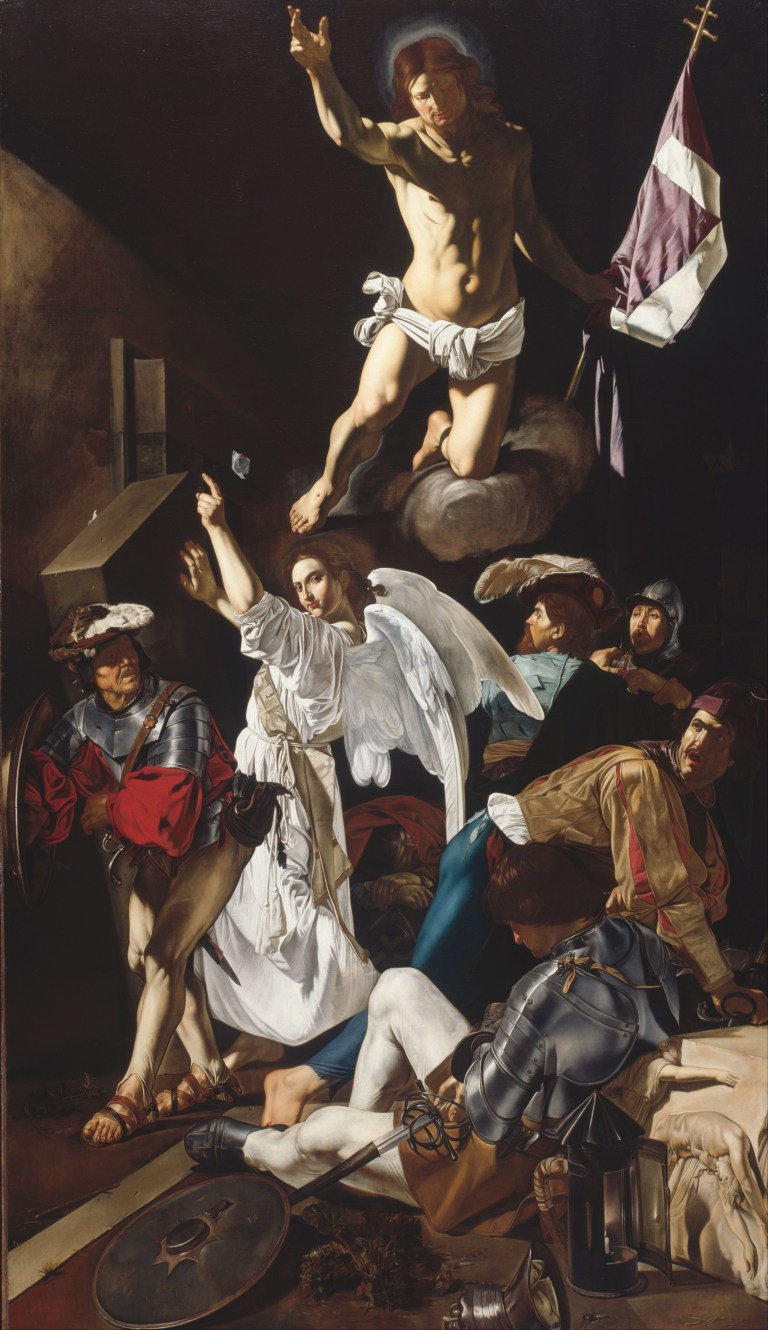
The Resurrection, Cecco del Caravaggio (1619), Art Institute of Chicago
In Cecco del Carravagio’s artistic depiction of the Resurrection, which measures more than 11 feet in height, he captures the tumult and movement of the very moment when Christ emerges victorious from the grave. Soldiers flee in terror as an Angel of God, facing the viewer directly and personally, signals in triumph the victory of life over death.
«There was a violent earthquake, for an angel of the Lord came down from heaven and,
going to the tomb, rolled back the stone and sat on it. And his appearance was like lightning, and his clothing as white as snow. The guards shook for fear of him and became like dead men.» (Mt 28, 2)
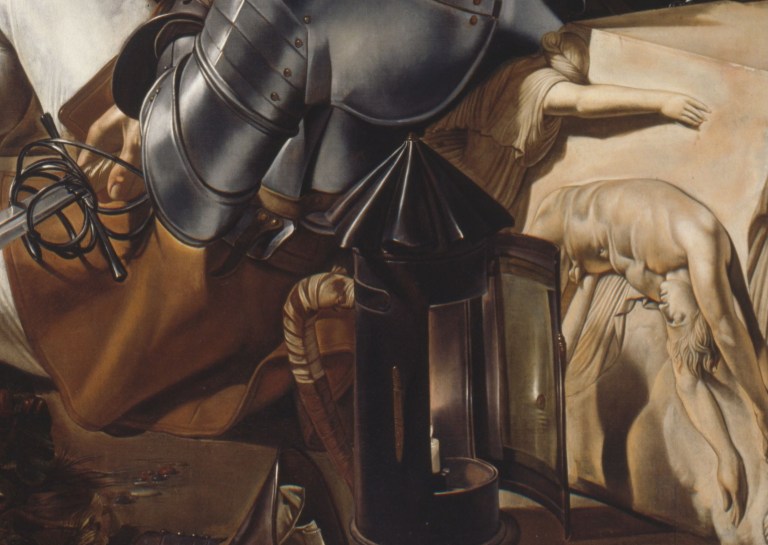
Christ is bathed in light, as is the flag he holds in his hand, a symbol of his victorious defeat of sin. His wounds are clearly visible, as ornaments that are no longer a sign of shame, but rather the merit badges of the King, ruler of a kingdom which is definitive and universal. Details in the painting suggest the overturning of an old regime, and the death of Death itself.
The hymn Aurora lucis is sung throughout the Easter Octave, and forms the introduction of the Laudes office of the Book of Hours. It dates back to the 4th or 5th century and is often attributed to St. Ambrose. It sings the praises of this new and peculiar King, and is thus an especially apt poem to help meditate this image of the Resurrection.
Auróra lucis rútilat, The day draws on with golden light,
cælum resúltat láudibus, glad songs go echoing through the height,
mundus exsúltans iúbilat, the broad earth lifts an answering cheer,
gemens inférnus úlulat, the deep makes moan with wailing fear.
Cum rex ille fortíssimus, For lo, he comes, the mighty King,
mortis confráctis víribus, to take from death his power and sting,
pede concúlcans tártara to trample down his gloomy reign
solvit caténa míseros. and break the weary prisoner’s chain.
Ille, quem clausum lápide Enclosed he lay in rocky cell,
miles custódit ácriter, with guard of armèd sentinel;
triúmphans pompa nóbili, but thence returning, strong and free,
victor surgit de fúnere. he comes with pomp of jubilee.
Inférni iam gemítibus Now they put their grief away,
solútis et dolóribus, the pains of hell are loosed today;
quia surréxit Dóminus for by the grave, with flashing eyes,
respléndens clamat ángelus. «Your Lord is risen,» the Angel cries.
Esto perénne méntibus Make of all, to thee we pray,
paschále, Iesu, gáudium fulfill in us thy joy today;
et nos renátos grátiæ when death assaults, grant, Lord, that we
tuis triúmphis ággrega. may share thy paschal mystery.
Iesu, tibi sit glória, To thee, who, dead, again dost live,
qui morte victa prǽnites, all glory, Lord, thy people give;
cum Patre et almo Spíritu, all glory, as is ever meet,
in sempitérna sǽcula. Amen. to Father and to Paraclete.
(English translation of the hymn by Thomas Alexander Lacey)
Descubre más desde De Arte Sacra
Suscríbete y recibe las últimas entradas en tu correo electrónico.
 De Arte Sacra